
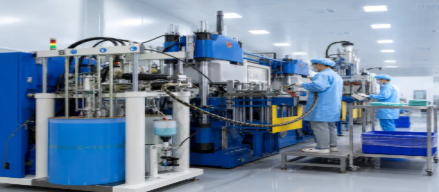
The medical industry depends on components that deliver consistent performance, precise dimensions, and reliable material properties. From surgical instruments and diagnostic equipment to medical tubing and patient care devices, silicone components play an important role in many healthcare applications. However, producing these components requires specialized knowledge, advanced processing methods, and strict quality management.
Choosing an experienced medical silicone manufacturer is an important decision for medical device companies, healthcare equipment suppliers, and product developers. The right manufacturing partner can transform a technical concept into accurately produced custom medical silicone parts that meet specific application requirements.
Why Medical Silicone Is Widely Used in Healthcare Applications
Medical-grade silicone is valued for its flexibility, chemical stability, and ability to perform under different operating conditions. Its material properties make it suitable for applications where consistent product quality and precise manufacturing are essential.
Unlike many conventional materials, silicone can maintain its physical characteristics across a wide range of temperatures. It can also be formulated with different hardness levels, allowing manufacturers to develop components with specific flexibility and compression requirements.
Excellent Flexibility and Elasticity
Many medical devices require components that bend, compress, stretch, or return to their original shape. Silicone provides these characteristics, making it useful for seals, gaskets, connectors, valves, and tubing.
A qualified medical silicone manufacturer can select suitable silicone formulations according to the mechanical requirements of each application.
Material Stability
Medical equipment may encounter moisture, cleaning agents, temperature changes, and repeated handling. Appropriate medical-grade silicone formulations can provide the material stability needed for these environments.
Material selection should always consider the intended application, exposure conditions, and applicable regulatory requirements.
Compatibility With Medical Applications
Certain medical-grade silicone materials are available with documented biocompatibility testing. These materials may be suitable for applications involving skin contact or other specific forms of patient contact.
The appropriate material must be selected according to the intended contact type and duration, along with relevant testing and regulatory requirements.
What Makes a Professional Medical Silicone Manufacturer Different?
Not every silicone processing company has the technical capabilities required for medical device production. Medical applications often demand greater control over materials, manufacturing processes, documentation, and inspection.
Working with a specialized manufacturer helps businesses address these requirements from the beginning of product development.
Experience With Medical-Grade Materials
A reliable manufacturer should understand the differences between general-purpose silicone and medical-grade silicone. It should be able to provide material documentation, technical specifications, and relevant test information.
This knowledge helps product developers choose materials that match their intended use.
Advanced Manufacturing Technology
Manufacturing precision is particularly important when producing small or complex medical components. Liquid silicone rubber (LSR) injection molding is widely used for producing detailed silicone parts with consistent dimensions.
A capable manufacturer should understand mold design, injection pressure, curing conditions, material behavior, and production optimization.
Consistent Quality Management
Medical components often require strict inspection procedures. Manufacturers should establish documented quality controls throughout production, including incoming material inspection, process monitoring, dimensional checks, and final product evaluation.
An organized quality management system helps reduce production variations and supports traceability.
Custom Medical Silicone Parts for Different Applications
Every medical device has its own design requirements. Standard silicone components may not always provide the correct dimensions, shape, hardness, or performance characteristics.
This is where custom medical silicone parts become valuable. Custom manufacturing allows companies to develop components according to their specific product designs and functional requirements.
Silicone Seals and Gaskets
Seals and gaskets help prevent fluid leakage and maintain connections between different equipment components.
Custom silicone seals can be produced in various shapes, thicknesses, and hardness levels. Their dimensions must be carefully controlled to achieve the required compression and sealing performance.
Medical Silicone Tubing
Silicone tubing is used in different medical and healthcare applications, including fluid transfer systems and specialized equipment.
Manufacturers can customize tubing according to:
- Inner and outer diameter
- Wall thickness
- Length and shape
- Material hardness
- Transparency and color requirements
These specifications help ensure compatibility with the intended device.
Silicone Valves and Connectors
Small silicone valves and connectors can control fluid movement, maintain pressure, or connect different equipment components.
Their performance depends on precise geometry, material selection, and manufacturing consistency. Custom molding makes it possible to produce specialized designs that meet particular functional requirements.
Silicone Components for Diagnostic Equipment
Diagnostic devices may contain silicone buttons, protective covers, seals, and flexible interfaces.
These components must fit accurately within the overall product design while maintaining the required physical properties.
The Importance of LSR Injection Molding in Medical Manufacturing
Liquid silicone rubber injection molding is an important manufacturing process for producing complex silicone components. It uses two-part liquid silicone material that is mixed, injected into a mold, and cured under controlled conditions.
For medical device manufacturers, LSR molding offers several advantages.
Accurate and Repeatable Production
Properly designed molds and controlled processing conditions help manufacturers produce components with consistent dimensions and details.
This is especially important for medical products containing small parts or complex geometries.
Suitable for Complex Designs
LSR injection molding can accommodate thin walls, intricate shapes, small openings, and detailed surface features.
These capabilities allow engineers to develop components that would be difficult to manufacture using simpler production methods.
Efficient Large-Scale Manufacturing
Once the mold and processing parameters are properly established, LSR injection molding can support repeatable production runs.
This makes the process suitable for businesses that require consistent component quality across multiple manufacturing batches.
How Custom Medical Silicone Parts Are Developed
Successful custom manufacturing involves several stages. Close communication between the customer and manufacturer helps ensure that the finished components match the original design requirements.
1. Design Review and Technical Assessment
The process begins with reviewing product drawings, CAD files, dimensions, tolerances, and application requirements.
Engineers evaluate the design to identify possible manufacturing challenges and recommend suitable improvements.
2. Silicone Material Selection
The next step involves choosing an appropriate silicone formulation.
Important considerations include hardness, tensile strength, elongation, temperature exposure, chemical resistance, and biocompatibility requirements.
3. Mold Design and Development
The mold determines the final shape and many dimensional characteristics of the component.
Manufacturers consider part geometry, mold cavities, material flow, curing behavior, and demolding requirements when developing the tooling.
4. Production and Quality Inspection
After sample approval, manufacturing can proceed according to the agreed specifications.
Inspection procedures should cover material consistency, visual appearance, dimensional accuracy, and application-specific performance requirements.
Important Factors When Selecting a Medical Silicone Manufacturer
Choosing the right manufacturing partner can influence product development, production costs, and long-term supply reliability.
Businesses should evaluate several factors before making a decision.
Material expertise: Confirm that the manufacturer has experience with suitable medical-grade silicone formulations and can provide relevant documentation.
Manufacturing capabilities: Review its LSR injection molding equipment, tooling facilities, and ability to produce complex components.
Quality systems: Ask about quality management procedures, inspection methods, batch records, and traceability.
Customization services: A suitable partner should support custom dimensions, material hardness, colors, and specialized product designs.
Communication and technical support: Clear communication helps prevent misunderstandings during sampling, tooling development, and production.
Production capacity: Evaluate whether the supplier can support both initial sample orders and future volume requirements.
Why Early Cooperation With Manufacturers Matters
Involving a medical silicone manufacturer during the early design stage can help businesses identify potential manufacturing issues before investing in expensive tooling.
For example, a small change in wall thickness, corner radius, or part geometry may improve mold filling and reduce manufacturing complications.
Early technical cooperation also helps engineers select suitable materials and establish realistic production requirements.
For companies developing new medical devices, this collaboration can simplify product development and improve manufacturing efficiency.
Conclusion
Medical silicone components are essential in many healthcare products, making material selection and manufacturing precision important considerations. From silicone tubing and seals to specialized valves and diagnostic equipment components, each application requires careful engineering and controlled production.
An experienced medical silicone manufacturer can provide the technical knowledge, material expertise, and manufacturing capabilities needed to produce high-quality custom medical silicone parts. By evaluating manufacturing technology, quality systems, customization capabilities, and material documentation, businesses can establish productive partnerships and develop silicone components that meet their specific medical device requirements.
