
Introduction to Studiosoapp.com
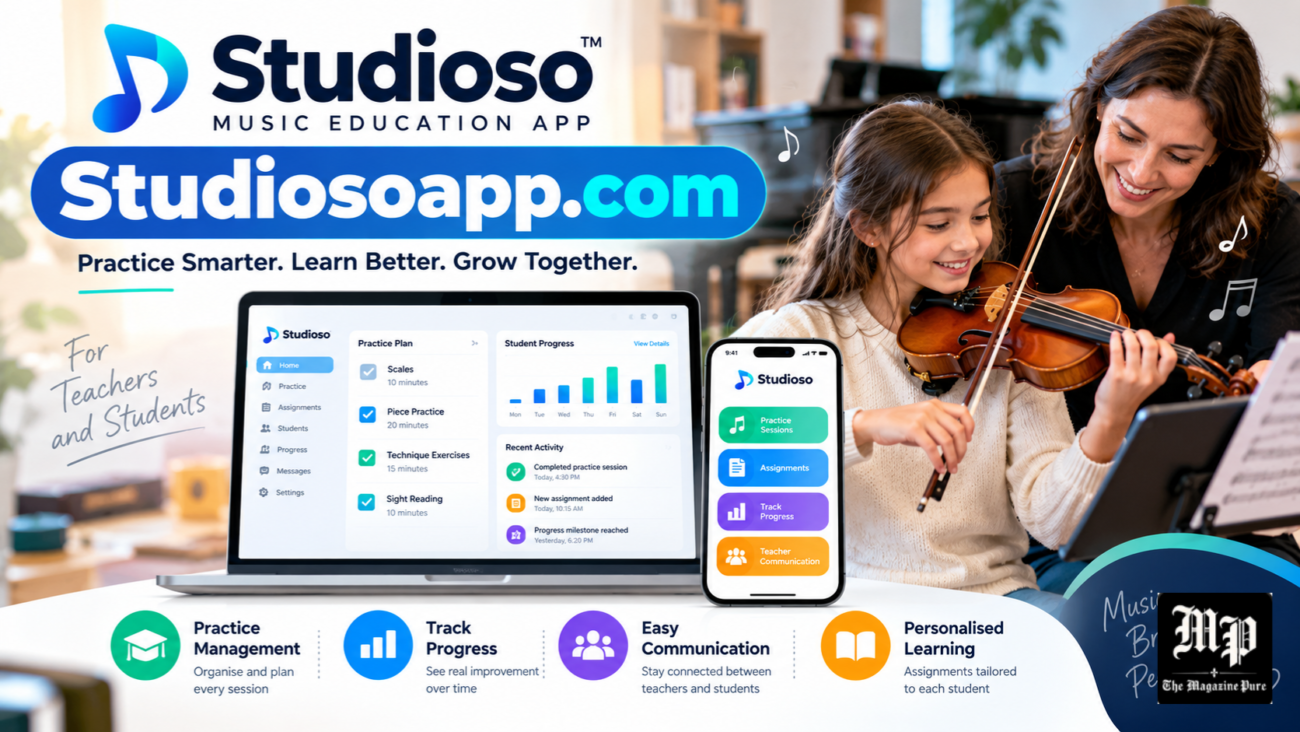
Studiosoapp.com was developed as a digital music education platform designed to help teachers and students improve communication, organize assignments, and manage regular practice sessions. The application focused on making music learning more structured by combining traditional instruction with mobile technology. It introduced tools for tracking practice time, setting weekly objectives, recording performances, and monitoring student progress. These features aimed to make independent learning more productive while helping teachers maintain contact with students between scheduled lessons.
Learning a musical instrument requires consistent practice, proper guidance, and patience. Many students struggle to remember instructions or maintain effective routines when practicing without their teachers. Studioso addressed these challenges by creating a connected environment where students could follow assignments and receive guidance. The platform attracted attention through educational technology programs and startup competitions. Although its current availability remains uncertain, its original features provide an interesting example of how technology can support music education.
What Is Studiosoapp.com?
Studiosoapp.com was the official website associated with Studioso, a mobile application focused on music education and practice management. The platform was developed to support music teachers, students, and educational institutions through digital learning tools. Unlike conventional music applications that primarily provide lessons or entertainment, Studioso concentrated on improving the relationship between formal instruction and independent practice. Teachers could organize learning objectives, while students could record their activities and monitor completed assignments.
The application was associated with Studioso LLC, a company established in Minnesota, United States, in July 2017. Its original concept involved combining traditional music teaching with modern mobile technology. The platform provided separate experiences for teachers and students, allowing both groups to access relevant functions. Historical records identify mobile versions for Android and iOS devices. Studioso was intended to complement personal instruction rather than replace the professional expertise of music educators.
History and Development of the Studioso Music App
The development of Studioso began with an effort to address difficulties commonly experienced by music students. The application was founded by Ocean Salazar-Ferrer, whose personal background in violin performance influenced its educational purpose. He recognized that students frequently experience frustration when practicing alone because they cannot immediately receive feedback or remember every instruction from a lesson. Studioso was created to provide clearer assignments, encourage consistency, and strengthen communication between instructors and learners.
The startup gained recognition through Minnesota’s entrepreneurial community. In 2018, Studioso participated in the MN Cup competition and advanced to the youth division finals. The platform later received attention through the University of Southern California’s educational entrepreneurship activities. A 2019 university publication described its involvement with six pilot schools in Minnesota and approximately 1,500 users. These historical achievements demonstrate the project’s early development, although they do not establish its current business activity or user numbers.
How Studiosoapp.com Worked for Teachers and Students
Studioso operated through connected applications designed for music teachers and their students. Teachers could create weekly objectives, organize assignments, and monitor practice records. Students used their own application to access instructions, complete exercises, and record time spent practicing. This arrangement provided a consistent connection between classroom instruction and independent learning. Instead of depending entirely on handwritten notes, students could review their assigned activities directly through a mobile device.
The platform also supported progress monitoring, allowing teachers to examine how students approached their weekly responsibilities. Students could use a built-in timer during practice sessions and review completed activities afterward. This information helped instructors identify whether learners maintained regular routines or required additional encouragement. The system was particularly relevant to students who received weekly lessons but needed guidance during the remaining days. Its purpose was to make practice more organized and improve learning continuity.
Studioso for Teacher and Music Practice Management
Studioso for Teacher was developed to help instructors manage students and organize musical assignments. The application allowed teachers to establish objectives, review practice information, and assign recording activities. These functions could reduce confusion about homework and make lesson preparation more efficient. Instructors working with multiple students could examine individual progress and identify areas needing improvement. The platform was useful in concept for private music teachers and educators responsible for larger student groups.
A February 2020 review by music educator Yuhka Nagai documented practical use of Studioso with students. The review described functions involving student management, weekly objectives, practice percentages, and recording assignments. Teachers could also allow students to create personal goals alongside assigned exercises. This approach encouraged learners to take greater responsibility for their development. However, digital progress records could not independently determine whether musical techniques were performed correctly, making professional instruction and feedback essential.
Studioso for Student and Independent Learning
Studioso for Student was designed to make individual music practice easier to organize. Students could access teacher-assigned objectives, monitor completed work, and use a practice timer to record their activities. The application encouraged learners to approach practice sessions with specific goals rather than repeating musical material without direction. This structure could be particularly valuable for beginners who needed reminders about scales, exercises, musical passages, and techniques introduced during their lessons.
The student application also included a Technique Library containing guidance intended to improve practice methods. Students could consult this material when struggling with unfamiliar exercises or technical difficulties. Historical descriptions indicate that the student application was available without an initial download charge, although current availability is unconfirmed. Its main educational benefit involved encouraging responsibility, consistency, and awareness of progress. Regular practice remains important, but meaningful improvement also depends on concentration, correct technique, and constructive teacher feedback.
Recording Assignments and Student Progress Tracking
Recording assignments were among the notable features associated with Studiosoapp.com. Teachers could assign musical performances for students to record and submit for evaluation. This gave instructors an additional opportunity to assess rhythm, accuracy, articulation, and overall performance outside scheduled lessons. Students could also listen to their recordings and identify mistakes they had not noticed while playing. Such activities can strengthen self-assessment and help learners understand which sections require further attention.
Practice tracking complemented recording assignments by documenting how regularly students worked on their instruments. The built-in timer helped create records of completed practice sessions, while progress information showed whether assigned objectives had been addressed. Nevertheless, practice duration alone cannot measure musical achievement. Thirty minutes of focused practice may produce better results than a much longer session without clear direction. Studioso’s combination of assignments, recordings, and progress monitoring attempted to provide a more complete picture of student activity.
Studiosoapp.com Download, Registration, and Pricing
Historical information identifies Studioso as a mobile platform offering separate teacher and student applications. Users could establish connected accounts, allowing instructors to distribute objectives and students to share progress information. However, the original Studiosoapp.com website was not accessible during the October 2026 review, and its current registration process could not be confirmed. Anyone attempting to access an old account should verify the application developer and avoid entering personal information into unfamiliar websites using similar names.
Studioso originally followed a freemium business model. Historical startup records mentioned subscription costs between $2 and $4 monthly, while university coverage described free student access and paid arrangements for teachers or schools. These figures represent earlier pricing rather than confirmed current rates. Archived application records also describe teacher subscription arrangements connected to student capacity. Since present support and billing availability remain uncertain, users should not assume that the original subscription plans or mobile downloads are still operational.
Is Studiosoapp.com Still Available in 2026?
The original Studiosoapp.com website could not be accessed during the October 2026 research review. Historical university publications, company records, and archived application descriptions confirm that the platform existed and attracted early educational interest. However, these sources do not establish whether its original servers, teacher accounts, student services, or mobile applications remain active. An inaccessible website does not necessarily prove that a company has permanently closed, but current service availability should not be assumed without confirmation.
Another important distinction concerns a newer application called Studioso AI, associated with Studioso.dev. This application focuses on academic learning tools, including document summaries, lecture transcription, homework assistance, and artificial intelligence-powered study features. Its identified developer differs from the historical music education company. No verified connection establishes that the newer application replaced the original Studioso music platform. Users should carefully distinguish the two services before registering, installing software, or purchasing subscriptions.
Conclusion
Studiosoapp.com represented an innovative approach to digital music education by connecting teachers and students through structured practice management. Its features included weekly learning objectives, practice timers, progress tracking, recording assignments, and a Technique Library. The platform was established in 2017 and gained recognition through startup competitions and educational entrepreneurship programs. These developments highlighted the growing interest in using mobile technology to improve learning outside traditional music classrooms.
Although the original platform’s current operating status remains uncertain, its educational concept continues to demonstrate the importance of organized practice and clear communication. Students benefit from manageable objectives, consistent routines, and constructive feedback, while teachers need reliable ways to monitor progress between lessons. Studioso attempted to connect these responsibilities within one mobile learning environment. Its history illustrates how educational technology can support musical development while preserving the essential role of teachers, independent effort, and practical instruction.
