
Introduction
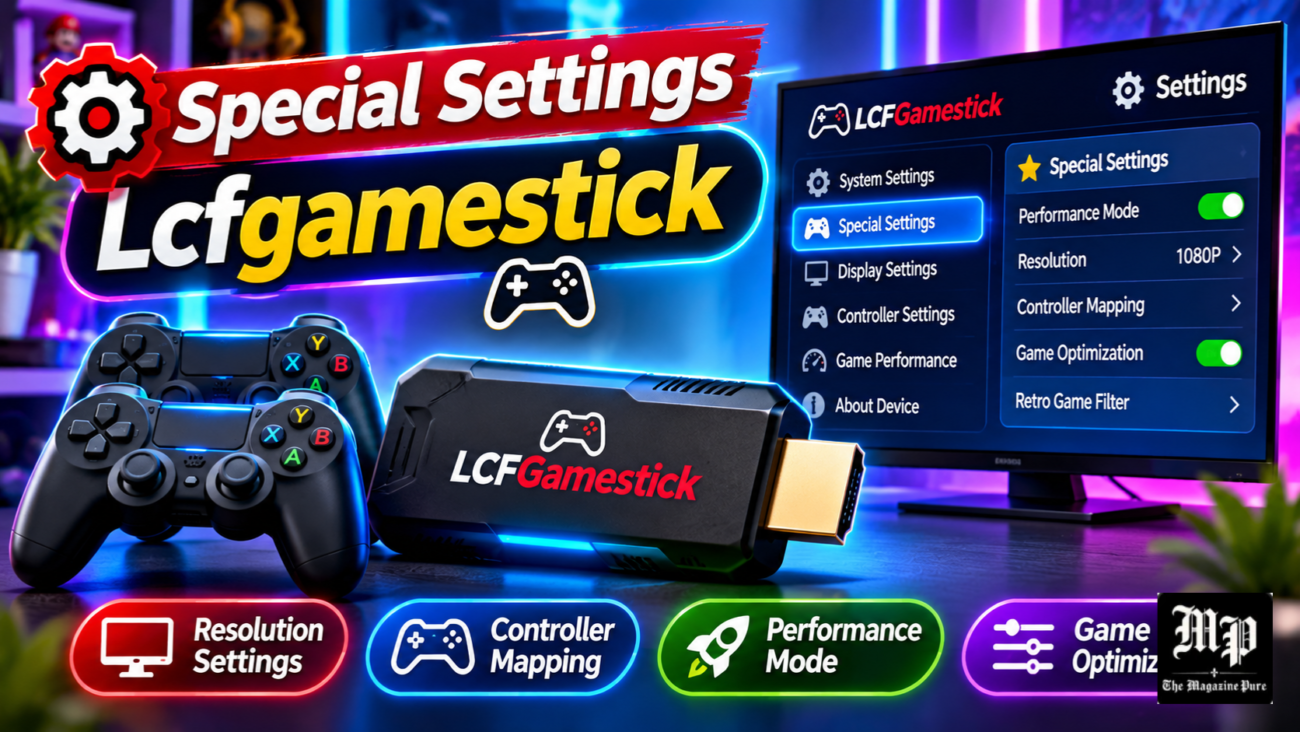
Special Settings Lcfgamestick is a phrase you may see when trying to make a retro gaming stick work better with your television and controllers. The settings commonly discussed include display output, screen shape, button mapping, quick menus, and firmware options. Knowing what each control does can help when a game looks stretched, responds slowly, or refuses to start.
LCFGameStick also appears as the name of a gaming information website and in discussions of device software. It does not identify one clearly documented hardware model with a universal menu, so the exact steps can vary between sticks. This guide focuses on practical checks that help you adjust your setup without putting saved games or device software at unnecessary risk.
What Are Special Settings Lcfgamestick?
Special Settings Lcfgamestick generally refers to extra configuration options for an HDMI retro gaming stick, including picture settings, controller input, and in-game features. Basic options help you start games, while more advanced controls change how they look and respond. For example, adjusting the display aspect ratio can correct a stretched image, while button mapping may improve controls for a particular game.
Start by checking your stick’s main screen for a settings area and noting which options already work. A photo of the current menu can help you restore a setting if a change makes things worse. Try one adjustment at a time, then open a familiar game to test the result. This is especially useful when switching between older games designed for square-shaped screens and newer television displays. Small, careful changes are easier to reverse than several adjustments made at once.
How Do I Open Special Settings Lcfgamestick?
To open the settings, first look for a System, Settings, or Configuration option on the stick’s main game-selection screen. Some Game Stick Lite firmware uses the SELECT button to open system settings, but that shortcut is not universal. If your controller has a clearly labelled menu button, consult its instructions before experimenting.
For an in-game quick menu, some versions use SELECT + START while a game is running. That menu may provide choices such as resume, save state, load state, or exit, depending on the installed emulator. If the combination does nothing, return to the main screen and check the device’s instructions rather than pressing random buttons repeatedly. Note where you entered the menu and how to leave it safely. This makes troubleshooting easier if you accidentally change a setting during play.
How Do I Configure Lcfgamestick for My TV?
To configure an Lcfgamestick for your TV, connect the gaming stick to an HDMI port, supply power through its intended USB connection, and select the matching HDMI input on the television. Wait for the main screen to load before trying to launch a game. If the picture is missing, check the input label and the fit of the HDMI connector first.
Next, check the controller’s batteries and connect its wireless USB receiver if that is how your model operates. Place the receiver where it is not blocked by a thick cabinet or the rear of the television. Once the menu responds, start a game you already know and test movement, sound, and the exit command. Make sure the USB power source meets the requirements printed on the device or in its manual. Unstable power can cause restarts and odd behaviour that resemble a software problem.
Lcfgamestick Resolution Settings and Display Options
Lcfgamestick resolution settings affect how the picture is sent to your television, while the aspect ratio determines its shape. Many classic games were designed around a 4:3 picture, so forcing them to fill a modern widescreen TV can make characters appear too wide. If your menu offers aspect ratio options, compare the original shape with a stretched display and choose what looks right. Change only settings supported by your television to avoid a blank or unstable screen.
A product described as Game Stick Lite 4K does not automatically render every retro game at native 4K resolution. The label alone does not tell you the quality of the original game graphics or the stick’s internal capabilities. For a smoother experience, try your television’s Game Mode, which can reduce some image processing and input delay. If the picture flickers, return to the last working video setting.
Controller Settings HSSGameStick: Pairing and Button Mapping
Controller settings HSSGameStick are worth checking when buttons fail, movement feels delayed, or the second player cannot join. Begin with fresh or properly charged batteries and make sure the wireless receiver is fully connected. Restart the stick after checking the receiver if the controller still does not respond. If the device has a pairing procedure, follow the instructions for that particular controller rather than guessing a button combination. Different bundles may use different receivers and controllers.
When input works but actions are assigned incorrectly, look for controller mapping in the device or emulator menu. Test the directional controls, confirm, back, start, and select buttons before making changes. Record the original mapping so you can restore it if needed. For input lag, sit closer to the receiver, remove obvious wireless obstacles, and enable TV Game Mode if available.
Also Read: ETrueGames New Games Reviews by ETrueSports: Guide
Lcfgamestick Special Settings by LyncConf Explained
The phrase lcfgamestick special settings by lyncconf appears in guides about configuring game sticks, but it should not be mistaken for a built-in menu guaranteed on every device. LCFGameStick is also used for a gaming information website, while similar product names can appear in discussions of retro console software. There are no clear official details establishing one set of controls shared by all sticks using these labels. Treat a guide’s instructions as model-specific advice until your own screen and manual match them.
The same care applies to instructions manual HSSGameStick and HSSGameStick instructions from HearthStats. Compare menu names, controller diagrams, and screen layout with your own hardware before acting. If a tutorial shows options you cannot find, do not install a different system image just to make the screen match. It is safer to use the features already present than to assume every similarly named stick has identical software.
How Do I Update Lcfgamestick Firmware Safely?
To update Lcfgamestick firmware safely, identify the exact device version first and obtain an update intended for that hardware. Look for a model label, the current software version in the settings menu, and any instructions supplied with the product. A file described only as an Lcfgamestick upgrade may not suit your board or storage layout. Installing incompatible firmware can stop the system from starting, so avoid files from unknown download pages and promises of universal performance improvements.
If your device provides a documented update process, read every step before beginning and keep the power connection stable. Back up accessible game saves and storage data if the instructions allow it, especially when a microSD card is involved. Do not remove the card or unplug the stick while an update is writing. If you cannot identify a matching official update or a clear recovery method, leaving the current software in place is the safer choice.
Game Stick Lite 4K Setup and Common Errors
For Game Stick Lite 4K setup, start with the basics: HDMI connection, the television’s selected input, reliable USB power, and a working controller. If the screen is black or displays No Signal, turn the device off and reseat the HDMI connection. Then check the power cable and try the appropriate input again. If possible, test another compatible HDMI port or television. These simple checks help separate a display connection problem from a failure to load the system menu.
When a Game Stick Lite 4K controller is not working, check whether the menu responds to another compatible controller, if you have one. Replace weak batteries, reconnect the supplied wireless receiver, and restart the device. If games open but freeze, see whether the same issue occurs with a different title. Repeated failures across many games can point towards power, storage, or software issues, while a single failing title may have its own problem.
HSSGameStick, TGAGameStick and ZeroGameStick Instructions
HSSGameStick, TGAGameStick, and ZeroGameStick appear in searches for retro gaming stick instructions and updates. When looking for a player guide ZeroGameStick or TGAGameStick settings, identify the exact product rather than assuming the names describe one model. Check the packaging, any sticker on the case, the controller layout, and the software information screen. Matching those details is especially important when you want a manual, a menu shortcut, or a compatible replacement controller.
A manual for a similar stick may still explain general ideas such as game selection, HDMI connections, or returning to the main menu. However, the button sequence for opening advanced settings can differ. For example, special settings for a TGAGameStick controller should be checked against the controller that shipped with it. Save copies of your own device instructions, and label them clearly if you own more than one stick.
Also Read: Playing Games on PlayBattleSquare: Blog or Game Site?
Save States, Performance Tweaks and Safe Reset
Game save states let certain emulators record a point during play so you can return to it later. If the quick menu offers this feature, test it with a game that already loads reliably and learn the difference between saving and loading. Loading an older state may replace your current progress inside the game session, so read the menu before selecting an option. Keep enough available storage for normal operation, and avoid removing a microSD card while the device is actively saving.
If games stutter or menus behave strangely, first undo your most recent setting change and restart the stick normally. Try the television’s Game Mode and check for weak power or a poorly placed controller receiver before considering a factory reset. A reset may clear saved preferences and, on some systems, other stored data. Only use it after checking what will be removed and backing up anything important.
Conclusion
Special Settings Lcfgamestick can be useful for improving the picture, making controllers respond correctly, and understanding a retro game stick’s menu options. The best results come from checking your exact model, starting with basic connections, and changing one option at a time. Display adjustments, button mapping, and careful save-state use may solve problems without complicated software changes.
Keep your device instructions nearby, protect your saved games, and be cautious with unfamiliar firmware downloads. With a steady approach, you can spend less time fixing avoidable setup problems and more time enjoying the games already on your stick.
For more helpful guides and the latest updates, visit The Magazine Pure.
